INTERNATIONAL GOAT ASSOCIATION
  • News & Info
    • Blog
    • Mission-Vision
    • Newsletters >
      • Current Newsletter
    • SRR Journal >
      • SRR Editorial Board
      • SRR reports
    • Repository >
      • Books, Manuals, etc
      • Financial Information
      • IGA Documents >
        • Brochures and more
        • History of IGA
        • Member Lists
        • Scaling-Up Successful Practices
      • Photo Gallery
      • Proceedings
      • Videos >
        • Videos en español
        • conference videos
  • Conferences
    • International Conferences >
      • 14the ICG, Chongqing, China
      • 13th ICG, virtual >
        • 13th ICG documents
      • 12th ICG, Antalya, Turkey
      • 11th ICG, Las Palmas, Spain
      • 10th ICG, Recife, Brazil
      • 9th ICG, Queretaro, Mexico
      • 8th ICG, Pretoria, South Africa
      • 7th ICG, Tours, France
    • Regional Conferences >
      • 2025 ERCG, Tenerife, Spain
      • 2019 ARCG, Chitwan, Nepal
      • 2018 ARCG, Jaipur, India
      • 2017 World Goat Day, Iran
      • 2014 European Regional Conference on Goats
      • 2013 IGA Regional Conference, Norway
      • 2007 IGA Regional Conference, Italy
      • 2003 IGA Regional Conference, Canary Islands
    • Conference Planning
  • Network
    • Board of Directors >
      • Board of Director documents >
        • voting
      • 2017 Chinese Natl Sheep and Goat Conf
    • Regional Directors >
      • More About IGA RDs
      • Roles of RDs
    • Country Representatives >
      • More About IGA CRs
      • Roles of CRs
    • Languages >
      • IGA in Armenian
      • IGA in Czech
      • IGA auf Deutsch
      • La IGA en Español >
        • IGA Facebook - Español
        • articulos en español
      • L'IGA en Français
      • IGA in Hungarian
      • L' IGA in Italiano >
        • Lettera dal Presidente
        • Un po' di storia
        • Il Consiglio direttivo
        • Le Conferenze IGA
      • IGA in 日本語
      • IGA in Mandarin
      • IGA in Polish
      • A IGA em Portugues
      • IGA in Romanian
      • IGA in Slovak
      • IGA in Swahili
      • IGA in Turkish
    • Active Committees
    • Advisory Board
    • Stakeholders >
      • Goat Organizations
  • Membership
    • Online Application >
      • Individual memberships
      • Institutional Membership
    • Institutional Members
    • FAQ
  • Donate
  • PPR
  • Social Media

Country Report from Mexico

4/10/2026

0 Comments

 
Dr. Víctor Manuel Díaz Sánchez, newly appointed Country Representative for Mexico, sent us a country report.
Picture
Picture
​1. Introduction
Mexico currently has approximately 8,840,467 goats, according to official Mexican government censuses, placing it among the top 13 goat-producing countries in the world. Within the Americas, it ranks second only behind Brazil.
Globally, Mexico is currently among the top 25 goat meat and milk producers, with an approximate annual production volume of 41,034 tons of meat. Regarding milk, it is estimated that Mexico contributes 0.85% of global production, with an approximate annual output of 169,204,000 liters.

2. Distribution in Mexico
Goats were not present in Mexican territory. It was during the period known as the "Spanish Conquest" that this species arrived in Mexico, and from then on, goats spread throughout the country. Currently, the states of Puebla and Oaxaca account for 25% of the country's goat population, with just over 2 million animals, followed by the states of San Luis Potosí, Zacatecas, and Coahuila, which together account for other 25%. The rest of the states have populations of fewer than 600,000 animals, with some states, such as Chiapas and Mexico City, having populations as low as "Insignificant" in censuses.
In terms of milk production, Coahuila is the national leader in goat milk production, followed by areas in Guanajuato and Durango. In meat production, Zacatecas, San Luis Potosí, Coahuila, and Puebla together account for 42% of goat meat production, primarily for kid goat production, while the Mixteca region (Oaxaca, Puebla, Guerrero) stands out for its traditional production, also focused on meat.
It is important to say that goat farming in Mexico is concentrated mainly in the arid and semi-arid regions of the north and central parts of the country, where conditions are favorable for extensive grazing due to the species' hardiness and browsing ability in these areas.
3. Breeds Found in Mexico
The main goat breeds found in Mexico are:
For milk production:
o Alpine
o Saanen
o Toggenburg

For meat production:
o Boer

For dual purpose:
o Anglo-Nubian
o Murcian-Granadina
Picture
Picture
Picture
Picture
4. Mexican Breeds
The Criollo Negra goat, also known as the Querétaro Black goat, is found in areas such as the Bajío and Querétaro. It is characterized by its black coat, adaptation to arid climates, and ability to graze in areas with scarce food and water. It is considered a dual-purpose animal (meat and milk), exhibiting great
maternal instincts. It typically has a long, deep body, frequently with wattles. 
The white pastoral goat is another native zoogenetic resource of the Mixteca region in Mexico. It is characterized by its white coat, adaptability to mountainous terrain, and is fundamental to the local economy of this region. It is raised mainly under extensive and transhumant grazing systems. It is primarily used for meat production, which is closely linked to the region's culture.
The Creole goat of Guerrero is a highly hardy goat breed, important to the economy and diet of the Montaña and Costa Grande regions of the state. It is characterized by its adaptation to tropical climates, ability to survive in difficult terrain, black or varied coat color, with high fertility. They are slender animals with a convex profile, long ears, also with wattles. Primarily raised for meat production, it is one of the main livestock species in Guerrero.
The Veracruz Creole goat is a valuable genetic resource. A medium-sized breed, it is also highly hardy, adapted to tropical climates, resistant to disease, and capable of foraging in difficult terrain. It is considered a dual-purpose animal (meat and milk) with high variability. It adapts very well to heat, water scarcity, and mountainous terrain. It exhibits great diversity in color, horn shape, and ear shape.
They often have wattles. 
In addition to these three breeds considered Mexican zoogenetic resources; most of the goat population in Mexico is considered Creole and is managed by the social sector (80% of producers), with a diet based on grazing in communal areas and browsing on local shrubs. 

5. Goat Production Systems in Mexico
Intensive System. This system is highly mechanized and requires significant capital investment. It is primarily located in the Comarca Lagunera region, the Bajío region, and central Mexico. Focused on milk production, it utilizes specialized breeds (e.g., Saanen, Alpine, Toggenburg) in confinement, with rigorous feeding and health control. The production cycle aims for maximum efficiency, often with 8-month cycles, with the goal of obtaining up to three offspring in two years. It allows for higher milk production than extensive systems, with greater quality control.
These systems are generally better integrated into value chains, transforming milk into cheeses and other dairy products.
Extensive System. The extensive goat production system in Mexico is a traditional activity, predominant in arid and semi-arid zones. It is characterized by grazing on rangelands, high utilization of native vegetation (scrubland, shrubs), and low investment. It is important primarily for meat production and, to a lesser extent, milk production, adapting to adverse conditions. Traditionally, the herds graze during the day and return to makeshift corrals. Detailed production records are not kept in this system.
Although it is low-tech, it is an important source of income and food security in marginalized rural areas.
The transhumant goat production system in Mexico is practiced in the Mixteca region (Oaxaca/Guerrero) and semi-arid zones. It is an extensive, low-input model.
It consists of the seasonal movement of herds to graze native vegetation in forests and lowland jungles, optimizing forage and water throughout the year. It can be local or inter-community, moving the animals between mountainous and flat areas to take advantage of seasonal forage availability. Two types of "groups" or herds are distinguished: slaughter herds (fattening, 6 months of restricted grazing) and breeding herds (long-term free-range grazing). They are based on traditional knowledge of rangelands.
This system is distinguished by its adaptation to the environment and by being a traditional form of livestock farming that, in addition to production, helps manage the ecosystem through grazing.
Finally, the silvopastoral system in Mexico is a sustainable practice carried out mainly in Puebla, Oaxaca, San Luis Potosí, and Coahuila. It takes advantage of diverse forage, reduces costs, mitigates climate change, and improves soil fertility. It focuses on meat production.
It integrates goat production with forest conservation, improving the rancher's economic and environmental sustainability.
Picture
Picture
6. Main Products Obtained
Kid Goat. This is particularly prominent in the north and central regions of the country (Zacatecas, Nuevo León, La Laguna, San Luis Potosí), driven by culinary tradition and the adaptation of breeds such as Boer, Nubian, and Criolla.
Birria (Mexican stew). Originating in Jalisco in the 16th century, mole is a national culinary staple, traditionally made with goat meat marinated in a chili and spice adobo and slow-cooked. It emerged in Cocula as a way to utilize goat meat by slow cooking it with aromatic herbs. Traditionally, it is prepared in an earthen oven or pit, covered with maguey leaves. It is served in a consommé or in tacos. Jalisco, Michoacán, Aguascalientes, Zacatecas, and Colima are famous for their traditional production.
Mole de caderas (hip mole). This dish from the Mixteca region (Puebla, Oaxaca, and Guerrero) is made with goat hips and spine. It is primarily consumed in October and November, linked to the tradition of goat slaughter, and is characterized by a rich broth and local herbs.
Chito. This is a traditional snack consisting of dried and salted goat meat. It is mainly consumed in southern Mexico. It is characterized by its tough meat, often attached to the bone, which is sun-dried and then seasoned. It is sold in small plastic bags as a street snack. In the Mazatec tradition of Oaxaca, a stew of seasoned goat meat (rib or leg) is also known as "caldo de chito."
Cajeta. This is a traditional Mexican sweet made with goat's milk boiled with sugar until caramelized. It is characterized by its soft milk caramel, with varieties such as burnt, rum-flavored, or vanilla. Its main producers include Guanajuato, Coahuila, and Durango.
Cheeses. Goat cheese in Mexico is a widely consumed artisanal and commercial product, valued for being rich in protein and calcium and easier to digest. The texture is usually soft, creamy, and spreadable, ideal for salads, desserts, or eating on its own.Piel.
Goat leather in Mexico is a high-quality material, valued for its flexibility, softness, and resistance to wear, making it ideal for fine leather goods, footwear, jackets, and linings. León, Guanajuato, is the main center for production and tanning. It is widely used in cowboy boots, wallets, handbags, gloves, and clothing.
Picture
Picture
7. The Goat in Mexican Culture
The goat occupies a prominent place in Mexican culture, not as a native animal, but as a fundamental element introduced during the viceroyalty period that became deeply integrated into the country's landscapes, gastronomy, and traditions. Goat farming is especially important in northern and central Mexico, making goats and their products part of the culinary and economic identity in states such as Nuevo León, Coahuila, Guerrero, and Oaxaca. This influence is reflected in gastronomy, ecology, language, and folklore. In certain areas, goats are associated with local legends, even linked to representations of the devil in traditional dances. Another example is the pastoral goat, whose hide and horns are used in the Dance of the Devils, thus representing the income of many families in the region.

8. Health Challenges
Goat farming in Mexico faces significant health challenges, mainly related to infectious diseases. Animal health is crucial not only for productivity but also for preventing zoonoses and ensuring the sector's profitability.

Main Goat Health Challenges in Mexico:
• Infectious Diseases and Zoonoses: Brucellosis remains a public and animal health concern. Other important infectious diseases include contagious ecthyma, toxoplasmosis, and enzootic abortion.
• Parasitic Diseases: Internal and external parasites are a constant problem, exacerbated by resistance to dewormers due to their indiscriminate use.
• Impact of Drought and Nutrition: The lack of forage and water resulting from droughts weakens the immune system of goats, making them more susceptible to disease.
• Milking and Rearing Management: Poor hygiene during milking and inadequate facility management promote infections and animal welfare problems.
• Metabolic Diseases: Hypocalcemia is common in dairy goats, causing weakness and collapse.
Picture
Picture
9. References
  • https://www.gob.mx/agricultura/articulos/la-capricultura-en-mexico#:~:text=La%20elaboraci%C3%B3n%20de%20quesos%20de,de%20la%20leche%20de%20vaca .
  • https://nube.agricultura.gob.mx/poblacion_ganadera/
  • https://icamex.edomex.gob.mx/caprinos
  • https://www.gob.mx/agricultura/articulos/la-caprinocultura-en-mexico#:~:text=La%20crianza%20del%20ganado%20caprino,Centro%20Citibanamex%20de%20la%20CDMX.
  • Juan Carlos Silva-Jarquin, Héctor Mario Andrade-Montemayor, Héctor Raymundo Vera-Ávila, Marina Durán-Aguilar, Sergio Iván Román-Ponce, Vincenzo Landi, Amparo Martínez-Martínez, Juan Vicente Delgado Bermejo, Consorcio BioGoat. Diversidad y estructura genética de una población de cabras criollas negras de tres municipios del estado de Querétaro, México. Rev Mex Cienc Pecu 2019;10(4):801-818.
  • Juan Carlos Silva-Jarquin, Héctor Mario Andrade-Montemayor, Florencia Muñoz-Salinas, Isaacb Escalante-Hernández, Héctor Raymundo Vera-Ávila, Marina Durán-Aguilar, Sergio Iván Román-Ponce. Programa de valorización de la cabra Criolla Negra, un recurso zoogenético en peligro. Rev. Acad. Ciênc. Anim. 2019;17(Supl 1):77-85.
  • Gisela Fuentes-Mascorro, Lourdes Carmina Ricardi de la Cruz, Araceli Mariscal Méndez, Fernando Cuauhtémoc Solís Cortes, Juan Carlos Silva Jarquín Juan, Miguel Ángel Domínguez Martínez. Importancia de la cabra pastoreña de la mixteca. Revista Mexicana de Agroecosistemas Vol. 6 (Suplemento 2), 2019.
  • Villarreal-Arellano H.R, Fuentes-Mascorro G, Ramírez-Bribiesca J.E, Torres-Hernández G, Domínguez-Martínez M.A. Modelo morfoestructural en la cabra criolla pastoreña de la región mixteca del estado de Oaxaca, México. Actas Iberoamericanas de Conservación Animal,12 (2018) 155-163
  • https://agroregion.com/articulo?id=1188
  • Lozada-García, J.A, Carmona-Hernández, O, Torres-Pelayo, V.R, Fernández, M.S, López del Castillo-Lozano, M. Caracterización morfométrica de la cabra criolla (capra hircus) en el centro de Veracruz. Agroproductividad Vol. 8 Núm. 6 (2015): noviembre-diciembre.
  • Rubén Darío Martínez Rojero, Glafiro Torres Hernández, Santiago Martínez Hernández. Caracterización fenotípica, productiva y reproductiva de la cabra blanca Criolla del “Filo Mayor” de la Sierra Madre del Sur en el estado de Guerrero. Revista Electrónica Nova Scientia, Nº 11 Vol. 6 (1), 2013. ISSN 2007 - 0705. pp: 25 – 44.
  • https://agroregion.com/articulo?id=1188
  • Ponce-Covarrubias, J. L., & García y González, Ethel C. (2024). El valor genético de la cabra criolla del estado de Guerrero. Agro-Divulgación, 4(5). https://doi.org/10.54767/ ad.v4i5.369
  • https://www.revista-asyd.org/index.php/asyd/article/view/745/291#:~:text=Estos%20dos%20%C3%BAltimos%20grupos%20tienen%20experiencia%20en,escasez%20de%20forraje%20durante%20la%20sequ%C3%ADa%20(Mignon%2D
  • https://www.gob.mx/agricultura/articulos/la-caprinocultura-en-mexico#:~:text=Las%20principales%20razas%20de%20cabras,m%C3%A1s%20de%20160%20mil%20litros.
  • https://vun.inifap.gob.mx/BibliotecaWeb/_Content?/=14364
  • https://www.gob.mx/inifap/articulos/produccion-caprina-en-terrenos-extensivos
  • José Carlos López Ojeda, Efrén Ramírez Bribiesca, Jose Guadalupe Herrera Haro, Sergio Iban Mendoza Pedroza, Juan Ignacio Valdez Hernández, Ladislao Arias Margarito. Experiencias en el estudio de la trashumancia caprina de la mixteca oaxaqueña. Avances en Investigación Agropecuaria, vol. 25, núm. 1, Sup., pp. 162-164, 2021
  • https://laroussecocina.mx/palabra/mole-de-chito/#:~:text=Guiso%20caldoso%20de%20chito%20con,colindancia%20de%20Veracruz%20y%20Puebla.
  • https://www.imer.mx/xeb/mole-de-chito-cadera-o-zancarron/
  • https://www.ciad.mx/reivindicando-el-queso-de-cabra/#:~:text=Producci%C3%B3n%20de%20queso%20de%20cabra,comenzar%20a%20satisfacer%20otros%20mercados.
  • https://www.gob.mx/agricultura/articulos/descubriendo-la-caprinocultura-un-mundo-de-oportunidades?idiom=es#:~:text=La%20caprinocultura%20mexicana%20es%20robusta,y%20Coahuila%20los%20principales%20productores.
  • Gabriela Palomares Reséndiz, Francisco Aguilar Romero, Carlos Flores Pérez, Luis Gómez Núñez, José Gutiérrez Hernández, Enrique Herrera López, Magdalena Limón González, Francisco Morales Álvarez, Francisco Pastor López, Efrén Díaz Aparicio. Enfermedades infecciosas de relevancia en la producción caprina, historia, retos y perspectivas. Rev Mex Cienc Pecu 2021;12(Supl 3):205-223
0 Comments

Obituary for Javier Chaurand Montes

2/13/2026

0 Comments

 
Picture
Picture
Picture
Picture
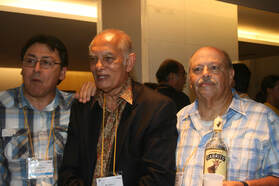
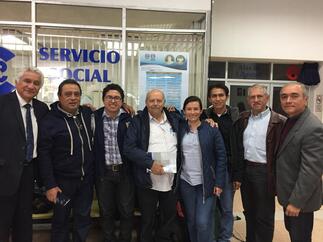
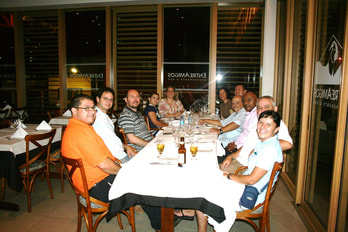
Héctor Andrade (México)
 
I will speak of Javier from the beginning of how I met him and the best memories I have of him. Javier could be described with one word, in capital letters: PASSION - passion for everything he did, especially goats, cheese, and family. I met Javier in the mid-90s, around 1992 to 1994. At that time, we were organizing various events, and our main goal was to found the National Association of Registered Goats. Back then, there were few goat breeders' associations, and in some states, none at all. We were generally small producers, and we were scattered. There had already been attempts to establish centers for goat farming, such as Tlahualilo, which was a genetic improvement center. People like Luis Portilla, a friend of Javier's father and his mentor, participated in Tlahualilo. From a very young age, he traveled with his father to the United States to buy livestock and attend ADGA (American Dairy Goat Association) conferences and livestock shows. On these trips, Javier attended to learn about morphological evaluation, while Luis Portilla, an engineer, was already an ADGA-certified goat judge. His father was one of the people who instilled in him a love and passion for goat farming. He had organized the first livestock shows with goat participation in Guanajuato. Since that time (1992-1995), we had already formed a group of goat farmers from various states of México who organized regional fairs and livestock training workshops. From this arose the interest in forming a national association of registered goats that would provide various services. This association was founded in Apaseo el Grande, Guanajuato, and was presided by José Olivero. Javier always participated enthusiastically in the training and activities of the association, such as genealogical records, production control, and so on. It was clear that if we didn't organize ourselves, we would never achieve anything. I participated as an animal nutrition consultant, and at each meeting we held (every month at different farms), Javier contributed and discussed how things should be done according to his ideas. The Association, through negotiations with the state and national governments, enabled a group of ranchers from Apaseo to travel to Europe, primarily to France, to learn about production systems and cheesemaking. Javier arranged a stay in France, where he learned different cheesemaking techniques, which led him to own one of the most prestigious goat cheese dairies in México (Quesos Chaurand). In the late 2000s, he organized one of the most important events in regional goat farming: the Cheese, Goat, and Cajeta Fair, with the participation of ANCCR and AMGCR. This event was held annually, featuring cheesemaking courses, morphological competitions, judging courses, goat forums, and more, which helped to raise the profile of this activity. Livestock farmers from across the country, various Latin American countries, and cheesemakers always participated. There were cultural events, gastronomic courses, and scientific and discussion forums, in which many researchers from around the world participated, including Dr. Le Jauen, a cheesemaking expert; Isidoro Jiménez, a master cheesemaker from the Canary Islands; and researchers such as Marichu Fresno from the Canary Islands, Sergio Álvarez, Juan Capote, Juan Manuel Micheo, Juan Vicente Delgado Bermejo, and Mongers, among others. Cheesemakers like Lee Salas from Perú and Carlos Yesas from México, among many others, also played a key role in the transformation of this industry into a modern and highly regarded goat farming sector. Javier, in addition to being a goat farmer and cheesemaker, was a goat judge in various parts of the Americas, including Venezuela, Colombia, and Costa Rica. He had the gift of transmitting his passion to everyone who knew him. Wherever he went, he would always take the microphone and share his experiences, and when it came to cheese, he would talk about the expertise he had learned from the French. Being with him always sparked discussions in which he shared his perspective, but these discussions always ended positively. In his role as an organizer, he not only arranged goat and cheese fairs but also courses with renowned experts like José Luis Martín, the Spanish cheese affineur, which allowed us to continuously improve our techniques and products. Javier was always giving of himself. Among his last contributions to the industry was his role in founding the Mexican Association of Cheesemakers (ASMEQUESO). His family always came first. His wife, Mónica, his daughters, María José and Cosset, and more recently, his granddaughter, who was his princess. Often, his dedication to the business didn't allow him enough time for his family, but he managed to pass on that passion to them, ensuring a new generation would carry it on.
 
I don't know what else to say. He was a great friend to me, with whom I had great ups and downs; we were equally stubborn, but in the end, everything always turned out well.
Javier will be missed. Now who will I argue with? Who will I talk to about goats and cheeses with that same passion?
Farewell, my friend.


​Hablaré de Javier desde como lo conocí y de los mejores recuerdos que tengo de él. A Javier lo podríamos describir con una palabra y en mayúsculas, PASION, pasión por todo lo que hacía, en especial las cabras, el queso y la familia.
A Javier lo conocí a mediados de los 90, por 1992 a 94. En ese tiempo estábamos organizando diversos eventos y en especial la intención era el de fundar la Asociación Nacional de Caprinos de registro. Por aquella época existían pocas asociaciones ganaderas de caprinocultores, y en algunos estados no existían. En general éramos pequeños productores y estábamos dispersos; ya se habían intentado hacer centros de fomento a la caprinocultura como Tlahualilo, que era un centro de mejoramiento genético, en donde participaron personajes como el Ing. Luis Portilla, el cual fue amigo del padre de Javier y su mentor. Desde muy chico viajaba con él a Estados Unidos, para la compra de ganado y para asistir a las conferencias de la ADGA (American Dairy Goat Asssociation) y a las ferias ganaderas. En estos viajes Javier asistía para aprender de la evaluación morfológica, mientras que el Ing. Luis Portilla ya era Juez de caprinos certificado por la ADGA. Su padre fue uno de los personajes que le transmitió el gusto y pasión por la caprinocultura. Él había organizado las primeras ferias ganaderas con participación de caprinos en Guanajuato.
    Desde esos tiempos (1992-1995) ya habíamos formado un grupo de caprinocultores de diversos estados de la republica que organizábamos ferias regionales, y platicas de formación ganadera. A partir de esto nace el interés de formar una asociación nacional de ganado caprino de registro que proporcionara diversos servicios. Esta se funda en Apaseo el Grande Guanajuato, siendo presidida por el Lic. Jose Olivero. Javier siempre participó con mucho entusiasmo en la formación y en las actividades de dicha asociación, como los registros genealógicos, el control de producción, etc. Estaba claro que, si no nos organizábamos, nunca lograríamos nada. Yo participaba como asesor de Nutrición Animal y en cada reunión que teníamos (cada mes en diferentes granjas) Javier aportaba y discutía, sobre cómo deberían hacerse las cosas según sus planteamientos.
La Asociación, por medio de gestiones con los gobiernos estatales y el nacional, permitieron que un grupo de ganaderos de Apaseo pudieran viajar a Europa principalmente a Francia, para conocer los sistemas de producción y la producción de quesos. Javier gestionó una estancia en Francia, en donde aprendió las diferentes técnicas de quesería, lo cual lo llevo a tener una de las queserías de cabra más prestigiadas en México (Quesos Chaurand). A finales de los años 2000 organizó uno de los eventos más importantes de la caprinocultura regional, que fue la Feria del Queso, La Cabra y La Cajeta, con la participación de la ANCCR y la AMGCR. Cada año se realizaba este evento, en el que se organizaban curso de quesería, concursos morfológicos, curso de juzgamientos, foros caprinos, etc, lo cual permitió que esta actividad fuera tomada en cuenta. Siempre participaban ganaderos del país, de diversos paises de América Latina y queseros. Había eventos culturales, cursos gastronómicos, y foros cientificos y de discusión, en los que participaron muchos investigadores de diversas partes del mundo como el Dr. Le Jauen, experto en queseriá, el maestro quesero canario Isidoro Jiménez, investigadores como Marichu Fresno de Canarias, Sergio Álvarez, Juan Capote, Juan Manuel Micheo, Juan Vicente Delgado Bermejo, Mongers etc. También queseros como Lee Salas de Perú y Carlos Yesas de México y muchos más, que permitieron el cambio en esta actividad hacia una caprinocultura moderna y de gran realce.
Javier, además de caprinocultor y quesero, fue juez de caprinos en diversas partes de America, como Venezuela, Colombia, Costas Rica. Tenía el don de transmitir esa pasión a todos los que convivíamos con él. A donde fuera, siempre tomaba el micrófono y hablaba de sus experiencias y cuando era sobre quesos, hablaba del saber hacer que le enseñaron los Franceses.
El estar con él siempre generaba discusiones en las que él mostraba su visión, pero esas discusiones siempre llegaban a buen fin. En su actividad como gestor, organizó no solo ferias del caprino y quesos. También cursos con exponentes de gran renombre como Jose Luis Martin, el afinador Español, que nos permitían siempre mejorar nuestras técnicas y productos. Javier se daba a los demás. Entre sus últimas participaciones en la organización del gremio fue parte de la fundación de la Asociacion Mexicana de Queseros (ASMEQUESO)
Su familia siempre fue lo primero. Su esposa Mónica, sus hijas Maria Jose y Cosset, y más recientemente su nieta, la cual era su princesa. Muchas veces el volcarse en la actividad no permite darle el tiempos suficiente a la familia, pero el logró transmitirles esa pasión, teniendo un remplazo generacional.
No sé qué más decir. Para mí fue un gran amigo, con el que tuve grandes encuentros y desencuentros, éramos igual de necios, pero al final siempre todo terminaba por un buen camino.
Javier se extrañará. ¿Ahora con quien discutiré?, ¿con quien hablaremos de cabras con esa pasión y de los quesos?
Hasta siempre Amigo

0 Comments

Announcement on Convening the 14th International Conference on Goats (ICG2026) (First Announcement)

2/12/2026

0 Comments

 
Picture
Picture
ICG2026 website
Abstract submission

To Relevant Universities, Research Institutes, Enterprises, and Institutions:
Following the successful organization of previous International Conferences on Goats, which have served as an important global forum for advancing goat science and industry development, we are pleased to announce that the 14th International Conference on Goats (ICG2026) will be held from September 18 to 22, 2026, in Chongqing, China. ICG2026 is organized by the International Goat Association (IGA), co-organized by the Sheep and Goat Science Branch of Chinese Society of Animal Husbandry and Veterinary Medicine, and hosted by and Southwest University. Building on the rich legacy of earlier ICG meetings, the conference will bring together researchers, educators, industry stakeholders, and policymakers from around the world to exchange the latest scientific advances, discuss emerging challenges, and promote the sustainable development of the global goat industry. The relevant matters and requirements of the conference are hereby notified as follows:

I. Organizing Units
1. Organizer: International Goat Association (IGA)
2. Co-organizer: The Sheep and Goat Science Branch of Chinese Society of Animal Husbandry and Veterinary Medicine
3. Hosts: Southwest University
4. Supporting Organizations: 
China Agriculture Research System(CARS-38) China Agriculture Research System(CARS-39)
Specialty Milk Professional Committee of China Dairy Association Chongqing Association of Animal Science and Veterinary Medicine Chongqing Key Laboratory of Herbivore Science
Chongqing Modern Agricultural Industry Technology System
Chongqing Engineering Research Center for Herbivore Resource Protection and Utilization
Chongqing Engineering Research Center of Higher Education for Herbivore Chongqing Key Laboratory of Forage and Herbivorous Livestock Innovation Alliance for Goat Breeding in Southwest China
Black Goat Research Institute of Southwest University Updating...
5. Supported Journals (Open for application)
Small Ruminant Research
China Livestock and Poultry Breeding
Updating...
6. Sponsors (Open for application)

II. Conference Theme
Goats: Pioneering Resilience Through Science, Sustainability, and Solidarity

III. Conference Topics
1. Genetics, Genomics, and Breeding
2. Reproduction, Physiology, and Animal Welfare
3. Nutrition, Feeding Systems, and Feed Resource Utilization
4. Health Management and Disease Control
5. Goat Products (Meat, Fibre, Milk, and etc.) and Value Chain Development
6. Production Systems, Economics, and Sustainability

IV. Participants
Personnel from relevant universities, research institutes, enterprises, and institutions engaged in scientific research, technological innovation, and scientific and technological management
in the field of oil and gas engineering are welcome to register.

V. Call for Abstracts
Conference abstracts are solicited from scientists and technicians worldwide involved in related fields. The content for exchange must be non-confidential; any confidential content must be declassified. Please submit your abstract via the following website before April 30, 2026: https://icg2026.bomeeting.net/Content/4355. Abstracts and posters selected by the Academic.
Committee will receive acceptance notifications in batches.

VI. Conference and Registration Arrangements
Conference Dates: September 18-22, 2026
  • September 18: Registration
  • September 19-22: Scientific sessions
Registration and Conference Venue: Chongqing YinXin Century Hotel (No. 9 Huixing Baotong Road, Liangjiang District Chongqing P.R. China)

VII. Registration and Fee
1. Registration and Fee:
All participants are required to register through the conference system. Online registration and payment are available via the conference website. Onsite payment is also accepted. Student participants must upload a valid student ID during registration.

Picture
* IGA members will receive a 20% discount on the registration fee listed in the table
The “Registration Fee” will be uniformly collected by the Southwest University and an invoice for “Conference Fee” will be issued.
Registration and Payment Channel: https://icg2026.bomeeting.net/116/cn. Payment method is bank transfer. For bank transfers, please indicate “ICG2026 + Order Number + Name” and upload the payment receipt to the registration system. We'll email the invoice to the delegates within 5 to 7 business days.
If you are interested in becoming an IGA member and get a discount on the registration fee, please click here.
For IGA members, the registration must be accompanied by a certificate of current payment of the IGA membership fee.
Note: The payment channel will be open on March 10, 2026.
2. Materials, venue costs, and meals during the conference will be arranged uniformly.
3. Travel and accommodation expenses are at the participant's own expense.
4. Registration Deadline: September 18, 2026.

VIII. Accommodation and Transportation
1. Agreement Hotel:
(1) Hotel Name: Chongqing YinXin Century Hotel.
Address: No. 9 Huixing Baotong Road, Liangjiang District Chongqing P.R. China.
Agreement Rate: CNY 370 per night. (includes breakfasts).
(2) Hotel Name: Chongqing Huachen International Hotel
Address: No. 33 Bai Guo Road Liangjiang District Chongqing P.R. China.
Agreement Rate: CNY 360 per night. (includes breakfasts).

All delegates are encouraged to complete online registration and payment in advance via the conference website to reserve accommodation. The organizing committee will give priority access to hotel rooms for those who have paid their registration fees early.
Note: Hotel accommodation fees are to be settled exclusively on-site during check-in.

2.Transportation Guide:
Picture
IX. Contact Information
Website and Registration: Zhi-peng Sun; Email: [email protected]
Payment and lnvoice: Qin-fei Zhou Email: [email protected]
Accommodation and Transportation: De-jun Xu Email: [email protected]
Abstracts and Posters: Ji-pan Zhang Email: [email protected]
Sponsorship and Exhibition: Yan-guo Han Email: [email protected]
Affiliation: College of Animal Science and Technology, Southwest University
International Goat Association (IGA)
The Sheep and Goat Science Branch of Chinese Society of Animal Husbandry and Veterinary Medicine

0 Comments

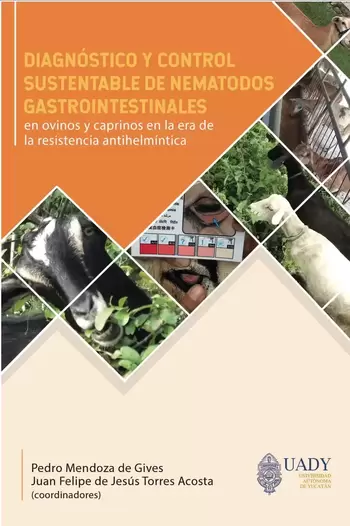
The new book "Management Practices for Controlling Nematode Parasites of Small Ruminants" has just been released.

12/29/2025

0 Comments

 
Picture
​Gastrointestinal nematodes infect ruminant livestock throughout the world and are an important cause of disease and production loss. Since their invention, producers have heavily relied on broad spectrum anthelmintics to help control these parasites, however, intensive use has resulted in widespread resistance issues in nematode populations, especially Haemonchus contortus.
Addressing the concerns of anthelmintic resistance, this book brings together research on management practices for controlling these nematodes in small ruminants. It covers:
- The nematodes of greatest importance, such as Haemonchus contortus, Teladorsagia circumcincta, and Trichostrongylous spp., which frequently result in parasitic gastroenteritis;
- Alternative approaches for nematode control, including the importance of adequate nutrition, methods for reducing pasture contamination, the role of genetics, grazing management systems and different forages;
- Insights from the cattle industry, and where lessons can be learned across the species divide.
With a focus on all small ruminants; sheep, goats and camelids, this book provides a useful resource for researchers and students of veterinary science, as well as practicing veterinarians and extension specialists.

0 Comments

Join International Year of Rangelands and Pastoralists 2026

11/29/2025

0 Comments

 
Many of our IGA members are interested in rangelands and pastoralists, given the importance of goats to pastoral livelihoods, and the centrality of sustainable pastures to goat keepers in diverse places. Please join this important event, and use the International Year to highlight the role of goats in these settings. 
Beth Miller, IGA Past President
Picture
​

International Year of
Rangelands and Pastoralists 2026
Opening Ceremony
 
2 December 2025
12:30–14:00 CET
Sheikh Zayed Centre, FAO Headquarters, Rome | Hybrid
 
Join us for the official launch of the International Year of Rangelands and Pastoralists 2026, taking place on 2 December 2025 at the Sheikh Zayed Centre, FAO Headquarters in Rome, in a hybrid format. 
 
Proclaimed by the United Nations General Assembly at its 76th session (Resolution A/RES/76/253), the IYRP 2026 aims to raise global awareness of the vital roles that rangelands and pastoralists play in food security, climate adaptation and mitigation, ecosystem health and sustainable rural livelihoods. 
 
The ceremony will feature remarks from the FAO Director-General Qu Dongyu, H.E. Khurelsukh Ukhnaa, President of Mongolia, and other dignitaries, followed by two panel discussions highlighting the environmental, social, and economic importance of rangelands and pastoralists.   
 
Coinciding with the opening ceremony, a five-day exhibition (1–5 December) will be held in the FAO Atrium, alongside the FAO Council, highlighting the key messages of the IYRP. The exhibition will feature a photo exhibition, promotional videos, cultural performances, and products from pastoralist communities, showcasing their contributions to sustainable food systems and ecosystem management.  
 
Please join the webcast here.
 
For more information, please contact [email protected].

0 Comments

The Old Irish Goat

10/30/2025

0 Comments

 
Picture
What is an Old Irish Goat

The Old Irish Goat is Ireland’s indigenous landrace breed, now critically endangered and only found in remote mountain ranges roaming in feral herds.  Interbreeding with imported domestic goats has caused major loss of the original the characteristics and adaptations.
The Old Irish Goat is highly adapted to the Irish landscape and climate. The males in particular are impressive animals, featuring – long hair, coiffs, beards and sideburns, and impressive horns. The females have a more delicate frame and a matriarchal role with their lineage being the social thread of the herd. Collectively these attributes make them a fascinating part of Ireland’s natural heritage.
After arriving in Ireland during the Neolithic age, about 5,000 years ago, they adapted naturally to the Irish landscape over time.  They move differently to modern (improved) goat breeds due to their height to leg length which has resulted in a small stocky goat with short legs and a long body. Its ears are small and worn in a pricked position and its impressive horns are large, corrugated, and bend over the shoulders in individual ways.  These goats have no tassels and are always bearded.  The male beard blends into the long-haired coat which is rough and thick and hangs down to the belly line.  Being cold weather goats, they have an underwool of cashmere. They have 12 different colour patterns which give rise to the description ‘coats of many colours’.  

​Click here for more details.

Picture
​12 Random Facts about the Old Irish Goat
  • 1. It was in England that the breed was first called the ‘Irish goat’.
  • 2. The Old Irish goat was Ireland’s only goat breed until around 1900.
  • 3. A thick cashmere undercoat under its long outer coat helps to keep the goat warm in cold weather.
  • 4. It is possible to tell the age of an Old Irish goat by counting its horn rings.
  • 5. Unlike the modern breeds of dairy goat, the Old Irish goat can be found in a variety of colours and colour patterns.
  • 6. In domestication, the breed could give up to 200 gallons of milk a year.
  • 7. Large numbers were once imported into England and Scotland annually, being called the ‘harbingers of spring’ as the drovers arrived in each town and village.
  • 8. It is closely related to the native goat breeds of England, Scotland and Wales.
  • 9. Feral herds of Old Irish goats are led by a female, the males forming bachelor herds for much of the year.
  • 10. Now only found in the ‘wild’ feral state, the goats once caught, are easily brought back into domestication.
  • 11. It has small ears worn in the pricked position.
  • 12. There are no tassels (wattles) on the neck.
0 Comments

JOY Goats Newsflash Oct 2025

10/15/2025

0 Comments

 
Crossing borders
Our work started in Uganda, and that is where almost all of the routine work continues.  But over the years, we have had a number of enquiries from other countries; and have carried out some work in the neighbouring parts of Kenya.  Recently, the international requests seem to be increasing.  In this year alone, I have visited two such countries, and held a long Zoom meeting with a third.

The map below shows where we are working in Uganda and also where we are reaching out to other countries.
Picture
Tanzania
At the end of last year, I got an enquiry from an organisation based in Tanzania.  They were concerned that the goats that they had been buying there might not be purebred dairy goats.  In February, I was able to do some training about the types of dairy goat that are available in East Africa, and in Uganda specifically.  The result was that they have bought some goats from Uganda, to complement the stock that they already had.
Picture
Picture
Ethiopia
The Tanzania project was already very strong; and although the exchange of ideas was useful, it did not dramatically change what they were doing.  At the other end of the scale, I had the opportunity to visit Ethiopia in June.  It wasn’t primarily about dairy goats - I was accompanying Jacqui to a church conference focussing on discipleship.  But they wanted me to explain about the goats as well.  They were very interested, and realised that it fitted very well with an existing project that the Lutheran Church there were involved with.

The biggest environmental challenge in Ethiopia is overgrazing.  In some areas there are now programmes aimed at excluding the livestock from selected parts and allowing regeneration of native forests.  The intention is that the regenerated forests will be cropped sustainably in what is known as a ‘cut and carry’ system.  For that to work well, it is necessary to switch from large numbers of low-productivity animals to smaller numbers of high-yielding animals.  That is where the dairy goats come in.
There are considerable challenges to be overcome in order to establish a dairy goat programme from scratch, but if it can be made to work, it will be part of something very significant.
Picture
Picture
Rwanda
And last week, from my office at St Margaret’s Church in Uxbridge, I had a discussion with someone in Rwanda, who wanted to start a dairy goat project near Kigali.  Drawing on our experience in Uganda, and also my visits to another proposed project at Changugu in SW Rwanda, I was able to give advice on what should be feasible.  We also talked about a similar proposal in Burundi.

The projects in Ethiopia and Rwanda may or may not come to anything.  But that is no different from new projects in Uganda.  We get enquiries from a new areas; we hold discussions with local mobilisers; if that goes well we carry out community training.  And finally we arrange for the ‘improver bucks’ to be delivered; and we hope that enough people mate their local goats with the new bucks, and then get milk from the offspring.  But at any stage, the project can fail.  In the map above, the areas of Uganda where there is a high density of red dots are places where it didn’t fail - either it is making steady progress, or in some cases ‘going viral’.  The fainter, isolated red dots are areas where we have tried it, and are waiting to see how well it takes root.

A wish list
There are two places on the map that are marked with yellow balloons.  One is in South Sudan.  There are currently many refugees from Kajo Keji living in Uganda.  Some have now returned, but others are waiting for peace to be fully established before taking that risk.  While in Uganda they heard about the goat project, and pleaded with us to take it across the border.  But we are also waiting until we are sure that the area will be sufficiently peaceful.

Another yellow balloon is in North Kivu in the Democratic Republic of Congo (DRC).  On the Uganda side of the border there is a solid arc of red around the slopes of the Rwenzori Mountains.  (The peaks, along which the border runs, are not populated.)  But the red stripe stops abruptly at the border.  The physical environment on the other side is the same, and the people are from the same tribes.  But the security situation makes it impossible for a livestock programme to be established.
Thanks for your interest,

        Dave Dowdy

Donate now


0 Comments

A new book on goats

9/25/2025

0 Comments

 
Picture
Yan, Editor in Chief, Small Ruminant Research, announced excellent news!

Dear IGA members,
 
Our Associate Editor, Dr. Veerasamy Sejian, has published a very updated book on goats and global climate change.
Written and edited by an international team of experts on goats, livestock, animal agriculture, and climate-smart food systems, Sustainable Goat Production in Changing Climate will appeal to a broad audience, from researchers to livestock specialists, veterinarians, and policymakers in food and sustainability.

Sustainable Goat Production in the Changing Climate aims to make the global scientific and academic communities aware of the potential of goats as a livestock of the future. When compared to more popular meat sources like cattle and swine, goats have a lower carbon footprint and can aid in mitigating the effects of climate change, as well as improving food production, poverty, and equity issues. This book will discuss the implications of climate change on goat production systems and emphasize the physiological potential of goats to adapt to erratically changing climatic conditions. Furthermore, the book includes chapters on strategies to mitigate the effects of climate change on goat production and highlights novel technologies used to assess the impact of heat stress in goats. Technology transfer strategies and policy-related issues have also been covered.

Key Features of this book:

•Explores the potential of goats as future livestock species for animal-origin foods
•Summarizes the impact of climate change on goats and goat production systems
•Proposes technological interventions, ranging from management to bio-technological solutions
•Identifies gaps in technology transfer activities and policymaking and provides solutions
I think that an announcement in the IGA newsletter would be of benefit to IGA members, who will certainly appreciate this book.
The book can be accessed through the following link
https://shop.elsevier.com/books/sustainable-goat-production-in-the-changing-climate/sejian/978-0-443-13525-5
 
All the best.
 
Serge-Yan Landau
 
S.Y. Landau, scientist emeritus
Department of Natural Resources, Agricultural Research Organization, Rishon leZion, Israel
Editor in Chief, Small Ruminant Research (Elsevier)
https://www.agri.gov.il/en/people/833.aspx

0 Comments

How are animals evacuating N.L. wildfires?

9/23/2025

0 Comments

 
Picture
These goats caught a ride with the Mounties (click here to jump to the original article)

Volunteers bring trailers to help 29 horses flee Holyrood wildfire.

People across Conception Bay had to respond quickly to evacuation orders this week due to two raging wildfires. For animal owners, evacuating also meant finding somewhere to put their animals. 
In Holyrood, one rancher had to figure out how to move 29 horses. Another pet owner had to call emergency services for help evacuating nine animals. In Carbonear, an animal rescue helped all kinds of animals. 
When the wildfire started in Holyrood, N.L. on Monday, the first thing Sliding K Ranch owner Katrina Butler thought about was her horses. 

"Honestly, the first thing that came to mind was let's just get them out … then we can worry about where they went," Butler told CBC Radio's The St. John's Morning Show on Tuesday. 
Butler said her own trailer can only hold four horses, so she had to ask for help from others on Facebook. She said people brought eight trailers to help with the effort.
The horses are now safe at four different stables in St. John's. 
Butler said she is grateful to all of the people who offered help. 
"It was pretty awesome to see everybody show up, and come together and offer everything that they could," she said.
Nine animals and no car Evacuating wasn't easy for Holyrood resident Leah Snook, who lives with her mom, dad, sister and nine animals. 
Snook said she only heard about the evacuation through social media, while home with her mom and cousin — with no transportation.
She said if they didn't have Facebook, she wouldn't have known what was happening.
"We were kind of watching all these cars going in and out our road, and we'd walk up to the end of the driveway, and no one would really stop to tell us what was going on," she said.
Once she learned she had to evacuate, Snook said she had to figure out how to get out with two cats, two dogs, five chickens.
While Snook waited, she said they harnessed the dogs, put the cats in carriers and placed the chickens in plastic tubs. 
She said family members tried to come pick them up, but were turned around at the Seal Cove checkpoint. 
Snook says her family told authorities at the checkpoint that they were still there, so she had hoped someone would come and help. But she said no one came.
"We were kind of waiting around for three hours to figure out who was going to come pick us up when we had no transportation," she said.
Snook said the response could have been better.
"We actually had to call 911, and get search and rescue to come up and get us," she said

Search and rescue crews showed up within half and hour, and brought them to the evacuation centre. 
Snook said the animals were held at the evacuation centre for some time, but now they're staying with family. 
Four goats evacuated by RCMPMeanwhile, a wildfire in Kingston, N.L. also forced many Conception Bay North communities to evacuate this week. 
A Carbonear-based animal rescue group decided to help by collecting donations for evacuees, and providing a place to put their animals. 


New Life Rescue volunteer, Shannon Layman, said they collected donations at Re-Tail New Life Rescue Thrift Store in Carbonear. 
"Anything from toiletries, to food for the animals," said Layman. "And when we get a call from the evacuation centre to send anything down, then [a volunteer] goes with a truckload."
  • Fighting fires is like 'stepping into hell,' says association head as ground crews continue busy summer
  • C.B.N. residents take stock of the damage, further convinced string of wildfires is suspicious
Layman said the backyard of one of the volunteers seems to be turning into a small farm. 
She said the Mounties transported four goats to the backyard — driving them there in the back of their cruisers. 

Picture
0 Comments

WVA/MSD Veterinary Student Scholarship 2025

9/23/2025

0 Comments

 
Apply to secure a 5.000 USD Scholarships to improve your academic experience

The WVA and MSD Animal Health are delighted to announce that the applications to the 2025 Veterinary Student Scholarship Programme are now open! We will attribute 40 scholarships of 5000 USD to students from countries in the regions of Latin America, Africa, North Africa/Middle East and Asia/Oceania.
Visit the Programme page to learn all the details and how to apply.

MSD Animal Health and the World Veterinary Association encourage qualified students to submit their applications and wish success to all candidates.

For more details, click here

0 Comments
<<Previous

    RSS Feed

    IGA Blog

    The International Goat Association promotes goat research and development for the benefit of humankind, to alleviate poverty, to promote prosperity and to improve the quality of life.

    Archives

    April 2026
    February 2026
    December 2025
    November 2025
    October 2025
    September 2025
    May 2025
    April 2025
    March 2025
    December 2024
    May 2024
    April 2024
    February 2024
    December 2023
    November 2023
    March 2023
    February 2023
    December 2022
    November 2022
    October 2022
    September 2022
    August 2022
    July 2022
    June 2022
    May 2022
    April 2022
    March 2022
    February 2022
    January 2022
    December 2021
    November 2021
    October 2021
    September 2021
    July 2021
    June 2021
    May 2021
    April 2021
    March 2021
    February 2021
    January 2021
    December 2020
    November 2020
    October 2020
    September 2020
    August 2020
    July 2020
    June 2020
    May 2020
    April 2020
    March 2020
    February 2020
    January 2020
    December 2019
    November 2019
    October 2019
    September 2019
    August 2019
    July 2019
    June 2019
    May 2019
    April 2019
    March 2019
    February 2019
    January 2019
    December 2018
    November 2018
    October 2018
    September 2018
    August 2018
    July 2018
    June 2018
    May 2018
    April 2018
    March 2018
    February 2018
    January 2018
    December 2017
    November 2017
    October 2017
    August 2017
    July 2017
    May 2017
    April 2017
    March 2017
    February 2017
    January 2017
    December 2016
    November 2016
    September 2016
    July 2016
    April 2016
    March 2016
    February 2016
    December 2015
    October 2015
    August 2015
    May 2015
    April 2015
    February 2015
    January 2015
    December 2014
    November 2014
    September 2014
    August 2014
    July 2014
    June 2014
    May 2014
    April 2014
    March 2014
    February 2014
    January 2014
    December 2013
    November 2013
    October 2013
    September 2013
    August 2013
    July 2013
    February 2013
    October 2012
    October 2011
    October 2008
    November 2006
    October 2006
    July 2006
    April 2003
    January 2002
    October 2000

    Categories

    All
    2013
    2014
    2015
    2016
    2017
    2018
    2019
    2020
    2021
    2022
    2023
    4D4F
    AABP
    AADGC
    AASRP
    Abadeh
    Abattoir
    Abner Rodriguez
    Abstract
    Activity
    Adani
    Adaptive Grazing
    Adel M. Aboul Naga
    ADGA
    Afghanistan
    Africa
    Afshari
    AFU
    AFZ
    Agba
    AgResults
    Agriculture
    AIGR
    AJAS
    Alabama
    Alberta
    Alejandro Salvador Cáceres
    ALEPRyCS
    Alexander Kahi
    Alfredo Teixeira
    Alfredo Teixeira
    Algeria
    Allergy
    Ambassador
    American Goat Federation
    Americas
    AMPCA
    Anastasio Argüello
    Anemia
    Angelika Stemmer
    Angel Trejo González
    Angora
    Animal Production
    Animal-source Food
    Anniversary
    Announcement
    Anthelmintic
    Antibiotics
    Anti-parasitic
    App
    April
    ARCG
    Argentina
    Arid Areas
    Arizona
    Armenia
    Arthritis
    Arthur Goetsch
    Artificial Insemination
    ASAS
    ASF
    Asia
    Aso
    August
    Australia
    Austria
    Award
    Banat White
    Barbara Rischkowsky
    Beef Cattle
    Behavior
    Belgium
    Beppe Di Giulio
    Beth Miller
    Biodiversity
    Biography
    Biosecurity
    Birthday
    BMPs
    Board Of Directors
    Boer
    Bolivia
    Book
    Botswana
    Brazil
    Breeding
    Breeds
    Breeds Of Origin Conservancy
    Brian Mconie
    British Alpines
    British Columbia Goat Association
    Brucellosis
    Bruce McGregor
    Burger
    Burkina Faso
    CAE
    CAEV
    Call For Abstracts
    Camel
    Camelids
    Canada
    Canagasaby Devendra
    Canary Islands
    Canda
    Caprimagazine
    Caprine Arthritis Encephalitis Virus
    Caprine Brucellosis
    Caprino
    Caprirom
    Carcass
    Caribbean
    Carina Visser
    Carol Delaney
    Carpathian
    Cashmere
    C. Devendra
    Central America
    Cervid
    CGIAR
    Charlotte Farin
    Chart
    Cheese
    Cheesemaking
    Chen Taiyong
    Children
    Chile
    China
    Chinese National Sheep And Goat Conference
    Chinese Sheep And Goat Association
    Chlamydia Abortus
    Christian Gall
    Christie Peacock
    Christopher Lu
    Christopher Lu
    Chryss Onwuka
    CIHEAM
    CIRAD
    Civilization
    Clara Viviana Rua Bustamante
    Clara Viviana Rúa Bustamante
    Claudia Torres Pizarro
    Climate Change
    Clone
    Coenurus Cerebralis
    Cognitive
    Colombia
    Colostrum
    Commercialization
    Committee
    Communication
    Conception
    Conference
    Conservation
    Consultant
    Contest
    Country Report
    Country Representative
    Coupon
    Course
    COVID19
    Cow Milk
    Cryptosporidium
    CSIRO PUBLISHING
    Cyprus
    Czech Republic
    Dairy
    Dairy Goats
    Dairy Product
    D. Angus Wielkopolski
    Darryl Grech
    Data
    David Dowdy
    David Sherman
    Davinia Sánchez
    Democratic Republic Of Congo
    Developing Countries
    Development
    Development Projects
    Deworm
    Diagnostics
    Discount
    Disease
    Doris Guadalupe Huamán Pasco
    Download
    Draft
    Dry
    Dry Forage
    EAAP
    East Africa
    Eastern Europe
    E.coli
    Ecological
    Economics
    Ecuador
    Edinburgh
    Editor
    Editor In Chief
    Editor-in-Chief
    Education
    Elsevier
    Email
    Embrapa
    Embryo
    Emilia Bagnicka
    Empowerment
    Enteritis
    Environment
    Environmental
    Epidemiology
    Español
    Español
    Ethiopia
    EuFMD
    Europe
    European Food Safety Authority
    European Union
    Evans Torres
    Expo
    Facebook
    FAMACHA
    FAO
    FAQ
    Farhad Mirzaei
    Farm Business
    Farmer To Farmer
    Farm Visit
    Fatty Acids
    Feeding
    Felipe Torres Acosta
    Felix Njeumi
    Fence
    Fencing
    Fiber
    Finland
    Fish
    Fodder
    Food Management
    Food Systems
    Foot And Mouth Disease
    Footprint
    Forage
    Forest
    Fort Valley State
    Forum
    France
    Francisco De Asís Ruiz Morales
    Free
    French
    Future
    Gabriel Vicovan
    Gaille Abud
    GAIN
    GALVmed
    Gambia
    Garrick Batten
    Gastrointestinal
    Gastrointestinales
    Gates Foundation
    Gender
    Genetic Parameters
    Genetics
    Genetic Selection
    Genomics
    George Haenlein
    George Haenlein
    G. Haenlein
    Ghana
    Gifu
    Global Alliance For Improved Nutrition
    Goat Breeding
    Goat Breeds
    Goat Cart
    Goat Farm
    GoatKeeper
    Goat Marketing
    Goat Meat
    Goat Milk
    Goat Population
    Goat Production
    Goat Project
    Goat Research
    Goat Show
    Govind Kannan
    Grazing
    Greece
    Greenhouse Gas
    Growth
    Guangxi
    Guatemala
    Guizhou
    Haemonchus Contortus
    Hair
    Hair Sheep
    Handbook
    Health
    Heather Briggs
    Heat Stress
    Hebei
    Hector Mario Andrade Montemayor
    Héctor Mario Andrade-Montemayor
    Heifer
    Help
    History
    Hong Kong
    Housing
    Hsiu-Luan Chang
    Hungary
    Icg
    IFAD
    IFIF
    IGA Achievement Award
    IGGC
    ILRI
    Imgoats
    Immunology
    Income
    India
    Indigenous
    In Memoriam
    Inner Mongolia
    INRA
    Institutional
    International Conference On Goats
    International Feed Industry Federation
    International Sheep Veterinary Congress
    Interview
    Investment
    Iowa
    Iran
    Ireland
    Irfan Daskiran
    Irfan Daskiran
    Irma Celi Mariátegui
    Irma Celi Mariátegui
    Issue Highlights
    ISVC
    Italy
    Ivermectin
    Jackie Dunham
    Jamaica
    Japan
    Japanese Society Of Goat Science
    Japan Goat Network
    Jaroslaw Kaba
    Jean Boyazoglu
    Jean Marie Luginbuhl
    Jean-Marie Luginbuhl
    Jean Paul Dubeuf
    Jean-Paul Dubeuf
    Jerky
    Jianzhou
    Jim De Vries
    Job
    Jon Chirisa
    JOY Goat Development Programme
    JSGS
    Juan Boo Liang
    Juan Capote
    Juan Capote
    Julie Cameron
    Jun Luo
    Kentaro Kawazoe
    Kenya
    Kiko Goats
    Kobe
    Kurdistan
    Lambs
    Langston University
    Late Fee
    Latin America
    Latvia
    Latvian Goat Society
    LEAP
    Leaves
    Lee Rinehart
    LEGS
    Lifetime Achievement
    Lisa Shepard
    Listeriosis
    Litter Size
    LiveGAPS
    Livelihood
    Livestock
    Livio Costa Junior
    Livio Costa Júnior
    Livio Costa-Júnior
    Logo
    Luca Rapetti
    Lucia Sepe
    Luis Dickson
    Magazine
    Malawi
    Malaysia
    Mali
    Malnutrition
    Malta
    Mammals
    Mamta Dhawan
    Management
    Manual
    Manuel Pesántez
    Manuel Pesántez
    Manuel Teodoro Pesántez Campoverde
    Marcel Amills
    Maria Eva Munoz Mejias
    María Rosa Caro
    Marisia Geraci
    Markhoz
    Mastitis
    Meat
    Meat Goat
    Meat Goats
    Meat Sheep
    Medicine
    Mediterranean
    Meeting
    Members
    Membership
    Meredith Dairy
    Metritis
    Mexico
    Microorganism
    Middle East
    Milan
    Milk
    Milk Fat
    Milking
    Minutes
    Mississippi
    Mohair
    Mónica Andrea Cardozo Herrán
    Montana
    Morocco
    Mortality
    Mouad Chentouf
    Mozambique
    Muhammad Ayaz
    Murciana
    Myrna Coombs
    NADBIO
    Narine Babayan
    National Goat Conference
    National Goat Summit
    National Goat Symposium
    NCAT
    NCSU
    Nematodes
    Nematodos
    Nepal
    Networks
    Newsletter
    New Zealand
    Nicaragua
    Nigeria
    Nissim Silanikove
    Noemi Castro
    North Africa
    North Carolina
    Norway
    NPR
    Nubian
    Nutrition
    Obituary
    Odd Arild Finnes
    OIE
    Oil Palm
    Oklahoma
    Oman
    Ontario
    Ontario Goat
    Organic
    Osman Mahgoub
    Ouranios Tzamaloukas
    OVIESPAÑA
    Ovino
    Ovinos
    Pakistan
    Palas
    Papers
    Paraguay
    Parasite Control
    Parasites
    Pastoral
    Pastoralism
    Pasture
    Patricio Dayenoff
    Paula Menzies
    Pdf
    Perinatal Mortality
    Peru
    Peste Des Petits Ruminants
    Phishing
    PIDEL
    Pierre Morand Fehr
    Pierre Morand-Fehr
    Pneumonia
    Podcast
    Poem
    Poland
    Portugal
    Portugues
    Portuguese
    Poster
    Postpone
    PowerPoint
    PPR
    PPR GREN
    PPR-GREN
    Presentation
    President
    Preventing Disease
    Prion
    ProAgria
    Proceedings
    Production Animals
    Production Systems
    Profile
    Progressive Dairyman
    Prolificacy
    Pro-poor
    Puerto Rico
    Pu Jiabi
    Qazvin
    Querétaro
    Questionnaire
    Raeini
    Recipe
    Refugee
    Regional
    Regional Conference
    Regional Director
    Registration
    Reminder
    Report
    Reproduction
    Request
    Research
    Resistance
    Rodrigo Arias Azurdia
    Romania
    Rosalee Sinn
    Ruminants
    Rural
    Saanen
    Safety
    Salmonella
    Sandor Kukovics
    Sándor Kukovics
    Sándor Kukovics
    Sandra Baxendell
    Sandra Solaiman
    Sandy Cameron
    Sanitary Management
    SARE
    Scam
    Science
    Scrapie
    Security
    Semi-arid
    Seminar
    Septicemia
    Seville
    Sharada Thapaliya
    Sheep
    Shijiazhuang
    Shogo Shinde
    Shoor Vir Singh
    Sichuan
    Sikosana
    Silvopastoral
    Smallholder Farms
    Small Ruminant
    Small Scale
    Small-scale
    SMARTER
    Smartphone
    Society
    Socioeconomic
    South Africa
    South America
    Southeast Asia
    Spain
    Spanish
    Spanish Society Of Sheep And Goat
    Special Issue
    SRR
    Stakeholder
    Standards
    Statistics
    Stela Zamfirescu
    Stela Zamfirescu
    Stephan Wildeus
    Steven Hart
    Store
    Strategic Plan
    Stress
    Student
    Study
    Sun Haizhou
    Supply Chains
    Surgery
    Survey
    Survival
    Susceptibility
    Sustainability
    Sustainable
    SVA
    Sweden
    Swine
    Sylvie Giger-Reverdin
    Symposium
    Taiwan
    Tanzania
    Technology
    Temperature
    Terry Gipson
    Test
    Texas
    Texas A&M
    Thailand
    Tierras Caprino
    Tilahun Sahlu
    Timea Milisits-Németh
    TLRI
    Toggenburg
    Training
    Training Centers
    Treatment
    Trees
    Tribute
    Trinidad & Tobago
    Trip
    Trópico
    Tropics
    TSE
    Turkey
    Tuskegee University
    UANL
    UAPTC
    Udder
    Uganda
    United Kingdom
    University Of Guelph
    University Of Murcia
    USA
    USAID
    USDA
    Vaccines
    Value Add
    Value Chain
    VCS
    Venezuela
    Venus Appel
    Vétérinaires Sans Frontières
    Vicki McLean
    Video
    Vienna
    Vietnam
    Villa Cabra
    Virology
    Virtual
    Voting
    Warren Foote
    Water Quality
    Weaning
    Webinar
    Website
    Weight Gain
    Weight Loss
    Welfare
    West Africa
    Western Europe
    Wiley
    William Wendorff
    Wolf
    Wolves
    Women
    Wool
    Workshop
    World Bank
    World Goat Day
    Xu Gangyi
    Yan Landau
    Ylva Persson
    Yogurt
    Yoko Tsukahara
    Yoko Tsukahara
    Yongiu Zhao
    Yongju Zhao
    Yoshiaki Hayashi
    Yoshitaka Nakanishi
    Young Park
    Young Park
    Young Scientist Award
    YouTube
    Yumiko Kawamura
    Yunnan
    Zanjan
    Zhang Yingjie
    Zhang Zaijun
    Zimbabwe
    Zoeuml-thorbergson
    Zuzana-sztankoova

Mission & Vision
Donate
Newsletters

Translate this page

​International Conferences
​​Regional Conferences
​
Board
International Goat Association
2516 Millbrook Rd., Little Rock, AR72227 USA
email: [email protected]
-454-1641
International Goat Association is a registered 501(c)5 nonprofit organization.
​All donations are tax deductible in full or in part.
© 2024 International Goat Association
Photo from Breville USA
  • News & Info
    • Blog
    • Mission-Vision
    • Newsletters >
      • Current Newsletter
    • SRR Journal >
      • SRR Editorial Board
      • SRR reports
    • Repository >
      • Books, Manuals, etc
      • Financial Information
      • IGA Documents >
        • Brochures and more
        • History of IGA
        • Member Lists
        • Scaling-Up Successful Practices
      • Photo Gallery
      • Proceedings
      • Videos >
        • Videos en español
        • conference videos
  • Conferences
    • International Conferences >
      • 14the ICG, Chongqing, China
      • 13th ICG, virtual >
        • 13th ICG documents
      • 12th ICG, Antalya, Turkey
      • 11th ICG, Las Palmas, Spain
      • 10th ICG, Recife, Brazil
      • 9th ICG, Queretaro, Mexico
      • 8th ICG, Pretoria, South Africa
      • 7th ICG, Tours, France
    • Regional Conferences >
      • 2025 ERCG, Tenerife, Spain
      • 2019 ARCG, Chitwan, Nepal
      • 2018 ARCG, Jaipur, India
      • 2017 World Goat Day, Iran
      • 2014 European Regional Conference on Goats
      • 2013 IGA Regional Conference, Norway
      • 2007 IGA Regional Conference, Italy
      • 2003 IGA Regional Conference, Canary Islands
    • Conference Planning
  • Network
    • Board of Directors >
      • Board of Director documents >
        • voting
      • 2017 Chinese Natl Sheep and Goat Conf
    • Regional Directors >
      • More About IGA RDs
      • Roles of RDs
    • Country Representatives >
      • More About IGA CRs
      • Roles of CRs
    • Languages >
      • IGA in Armenian
      • IGA in Czech
      • IGA auf Deutsch
      • La IGA en Español >
        • IGA Facebook - Español
        • articulos en español
      • L'IGA en Français
      • IGA in Hungarian
      • L' IGA in Italiano >
        • Lettera dal Presidente
        • Un po' di storia
        • Il Consiglio direttivo
        • Le Conferenze IGA
      • IGA in 日本語
      • IGA in Mandarin
      • IGA in Polish
      • A IGA em Portugues
      • IGA in Romanian
      • IGA in Slovak
      • IGA in Swahili
      • IGA in Turkish
    • Active Committees
    • Advisory Board
    • Stakeholders >
      • Goat Organizations
  • Membership
    • Online Application >
      • Individual memberships
      • Institutional Membership
    • Institutional Members
    • FAQ
  • Donate
  • PPR
  • Social Media